

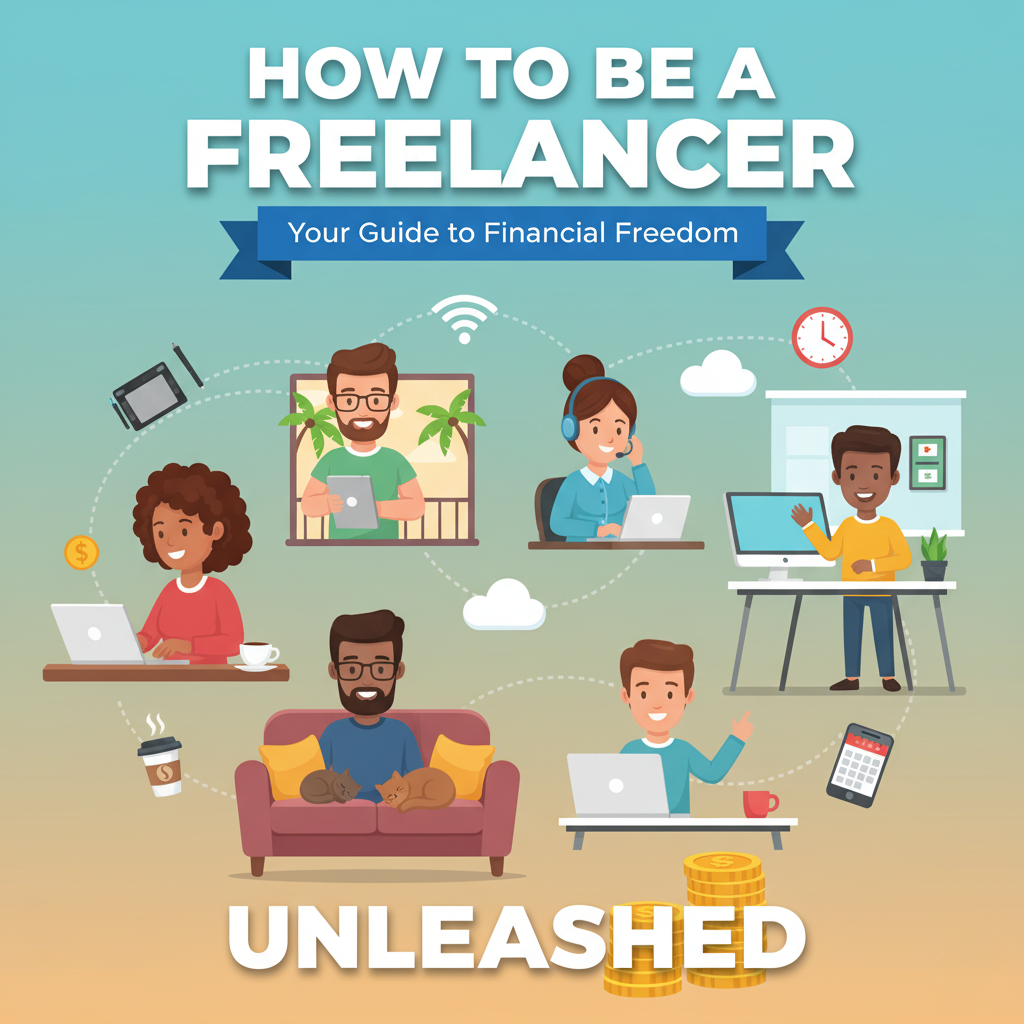
What Is Freelancing?
Freelancing means working independently — not as a full-time employee of one company. You offer your skills to different clients or companies for short-term projects or tasks. You get paid per job, not per month.
Example:
If you’re a graphic designer, you might design a logo for one client today and a website banner for another client tomorrow.
Step 1: Learn a Skill
To be a freelancer, you need a skill that people are willing to pay for. Some popular freelance skills include:
- Graphic design
- Writing and translation
- Web development
- Video editing
- Digital marketing
- Data entry
- Virtual assistance
Tip: Start with one skill and improve it through online courses, YouTube tutorials, or practice projects.
Step 2: Create Your Portfolio
A portfolio shows examples of your work. It helps clients trust you.
- Make a simple website or use platforms like Behance or LinkedIn
- Include 3–5 sample projects
- Add a short bio and contact info
If you’re new, create sample work for imaginary clients or offer free work to friends.
Step 3: Choose Freelance Platforms
These websites help you find clients and projects:
- Upwork — Great for beginners and professionals
- Fiverr — Sell services starting at $5
- Freelancer.com — Bid on projects
- Toptal — For advanced freelancers
- PeoplePerHour — Good for hourly jobs
Create a strong profile with your skills, experience, and portfolio.
Step 4: Apply for Jobs or Create Gigs
- On Upwork or Freelancer, search for jobs and send proposals
- On Fiverr, create a gig (service listing) and wait for orders
Tips for success: - Write clear, polite proposals
- Offer competitive prices at first
- Respond quickly to messages
Step 5: Deliver Quality Work and Get Paid
Once hired:
- Understand the client’s needs
- Deliver work on time
- Ask for feedback and reviews
Most platforms pay through PayPal, Payoneer, or direct bank transfer.
Step 6: Grow Your Freelance Career
- Improve your skills regularly
- Raise your rates as you gain experience
- Build long-term relationships with clients
- Market yourself on social media or your own website
Pros and Cons of Freelancing
Pros:
- Flexible schedule
- Work from anywhere
- Choose your projects
- Unlimited earning potential
Cons: - No fixed salary
- You must find clients yourself
- No paid holidays or benefits
Final Words
Freelancing is a powerful way to earn money and build your future. It’s not always easy, but with patience and effort, you can succeed.
Start small, stay consistent, and keep learning. Your freelance journey begins today!

Hi, this is a comment.
To get started with moderating, editing, and deleting comments, please visit the Comments screen in the dashboard.
Commenter avatars come from Gravatar.